
GRAVITY KNIFE HOLDER
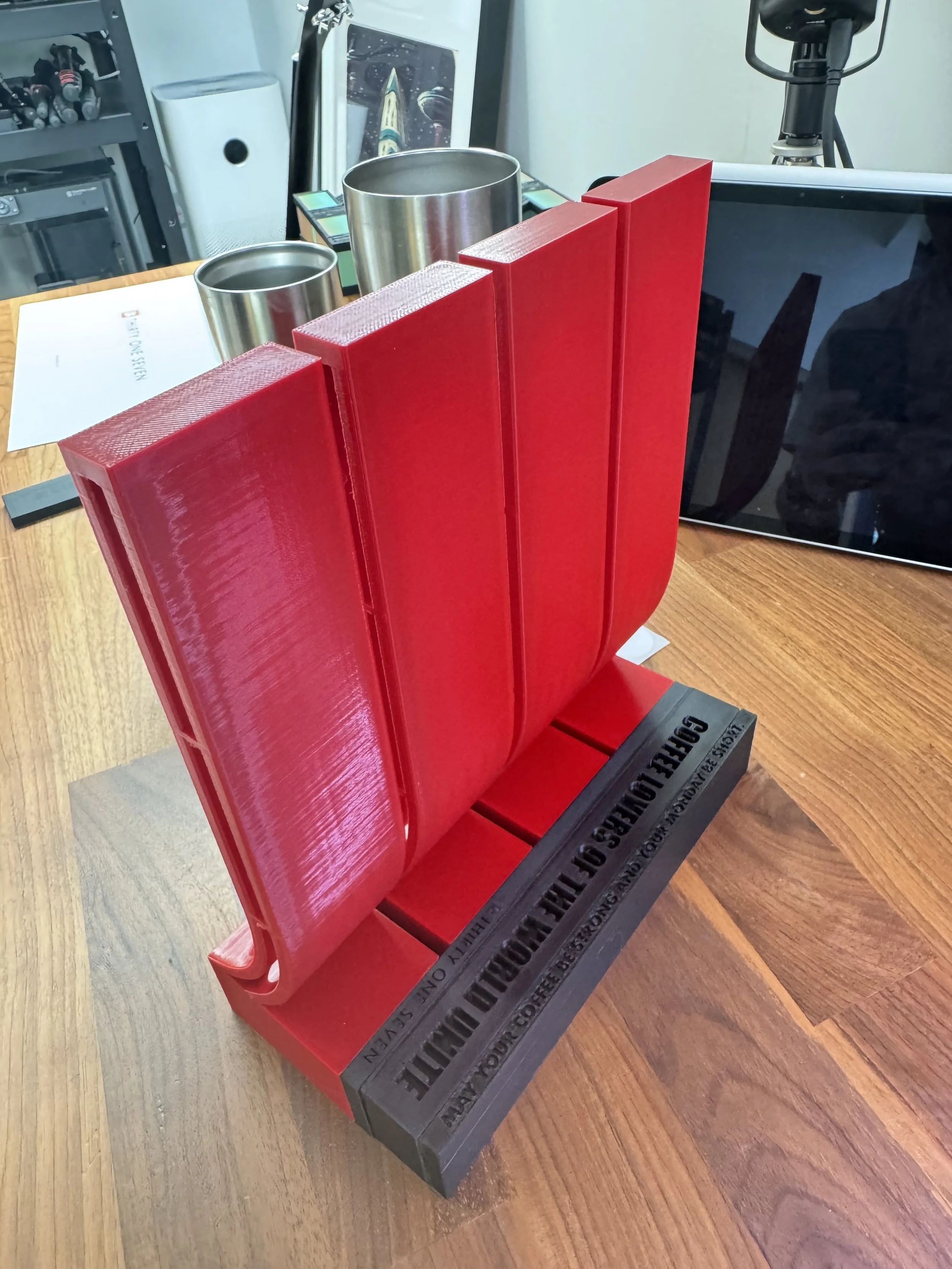
An experiment in holding a knife with gravity rather than a fixed clamp or exposed magnetic strip.
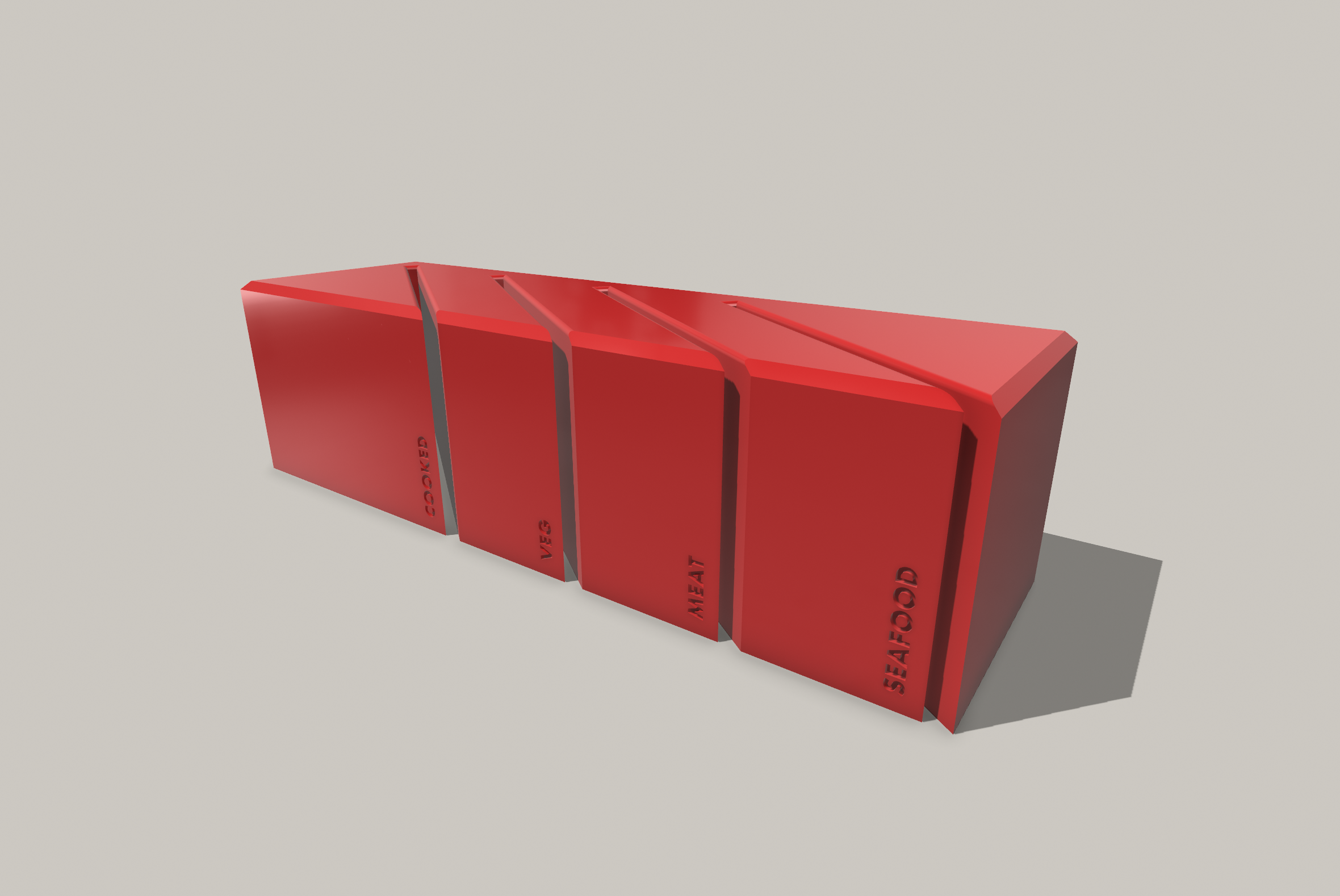
A DIFFERENT KIND OF GRIP
THE STARTING POINT
CLOSE AT HAND. OUT OF THE WAY.
A knife block needs room for an entire blade to travel. An exposed magnetic strip brings its own concerns in a family kitchen.
The question was whether a knife could be stored vertically, accessed with a shorter movement, and held by a mechanical action rather than a magnet on the blade.
The result is an ongoing experiment in gravity-assisted retention - not yet a finished kitchen product.
HOW THE MECHANISM BEHAVES
A SMALL MOVEMENT.
A MECHANICAL RESPONSE.
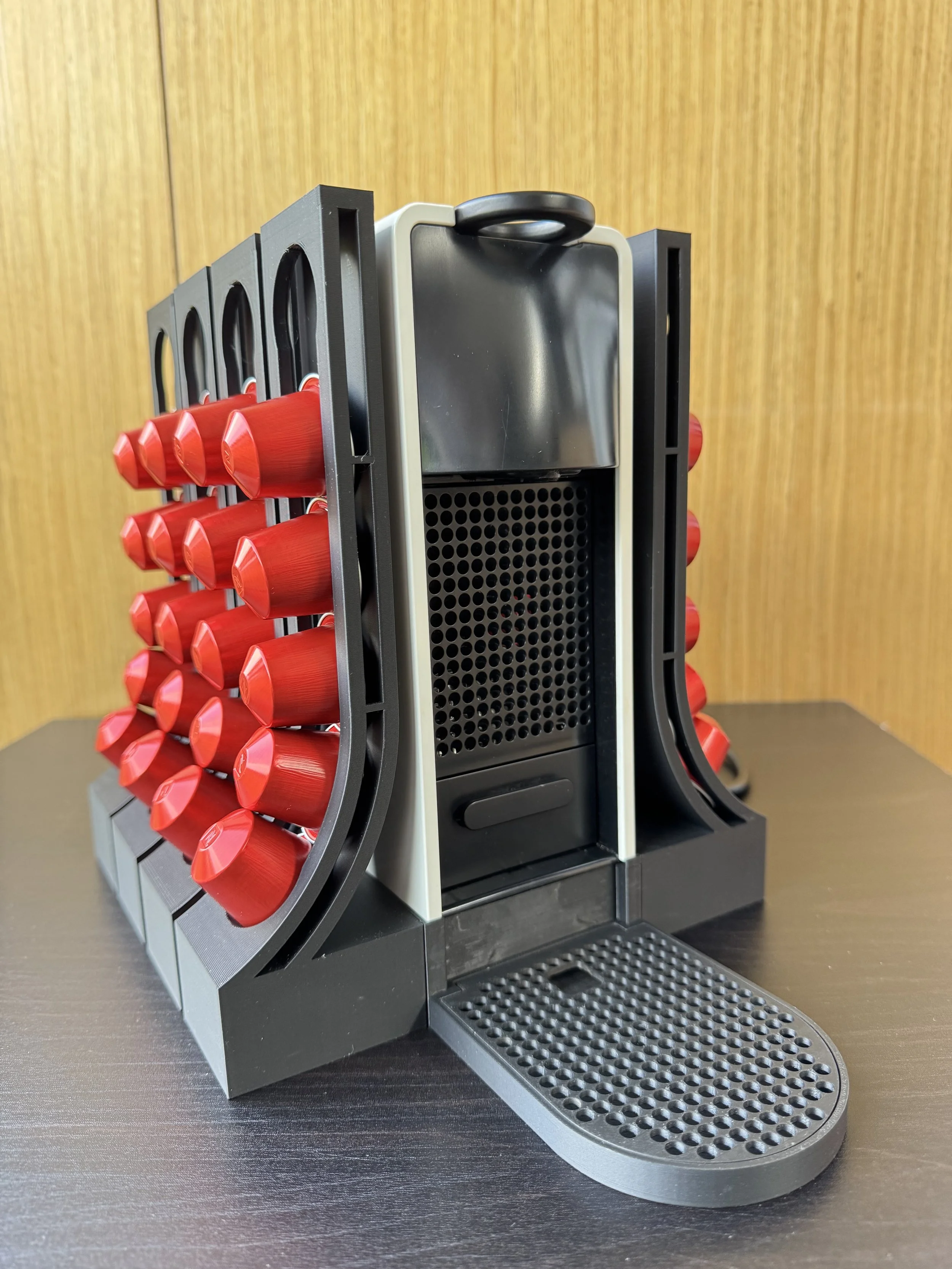
A captive roller moves within an angled channel. When the blade moves downward, the roller moves into gripping contact. Raising the blade slightly allows the roller to disengage.
This interactive drawing explains the principle only; it is not a verified sectional drawing or a safety demonstration.
The slot is empty. A weighted TPU roller rests inside the angled channel.
Illustrative motion only. This diagram is based on the prototype’s weighted TPU roller, embedded metal core and angled channel construction, but does not represent a validated safety mechanism.
THE CONTACT SURFACE
GRIP WITHOUT THE GRAB.
The roller’s surface does part of the work.
A separately printed, textured TPU sleeve wraps the roller, providing friction against the blade. The mechanism depends on the relationship between the roller, its angled channel and the contact material.
The material and shape remains subjects of testing - particularly across different blade finishes and weights.
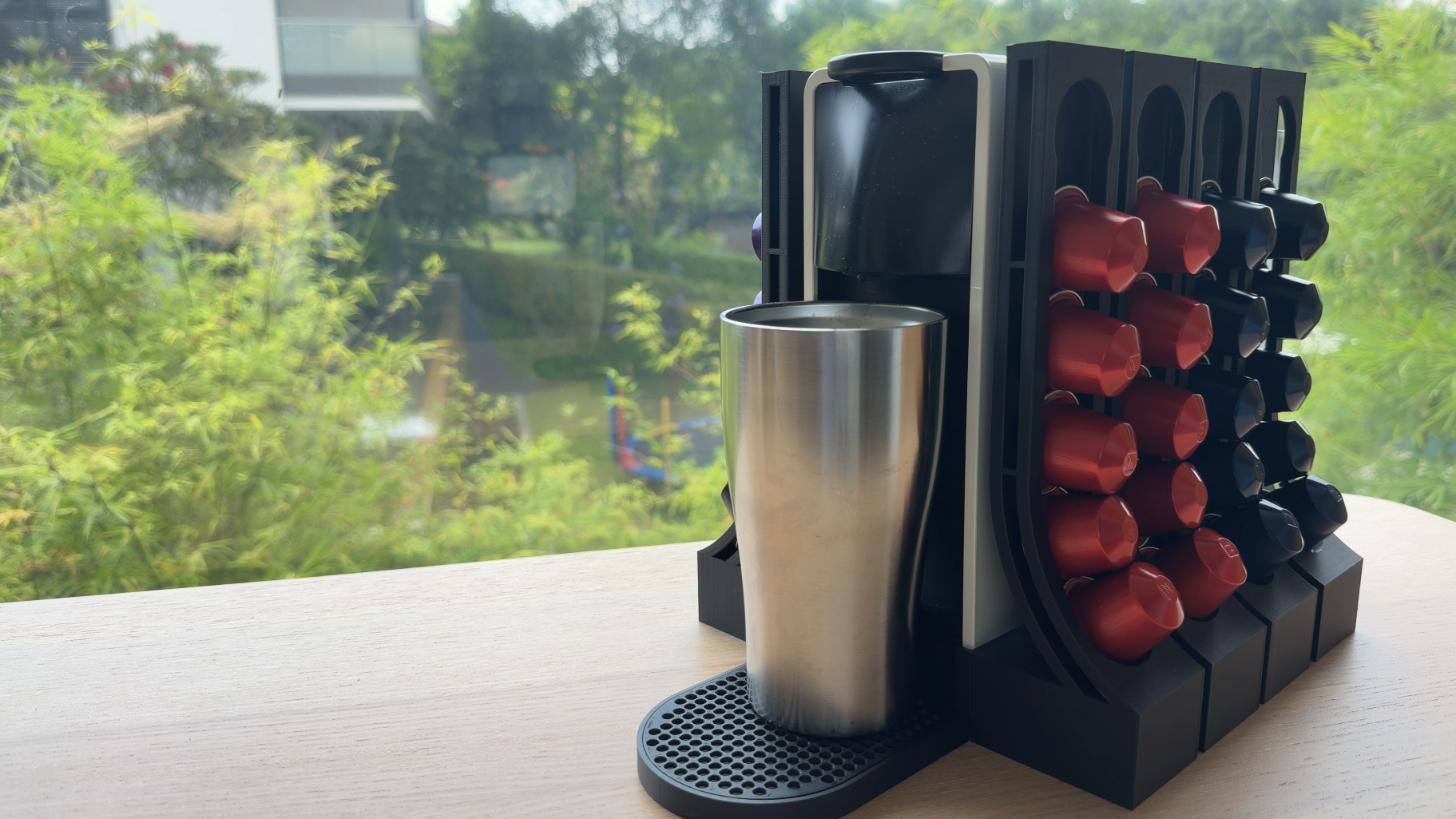
THE DOCK · INTEGRATED CONFIGURATION
Textured TPU sleeve
Raises the Essenza Mini to create more clearance beneath the coffee outlet.
Roller core
Forty capsules arranged around the machine rather than scattered across the counter.
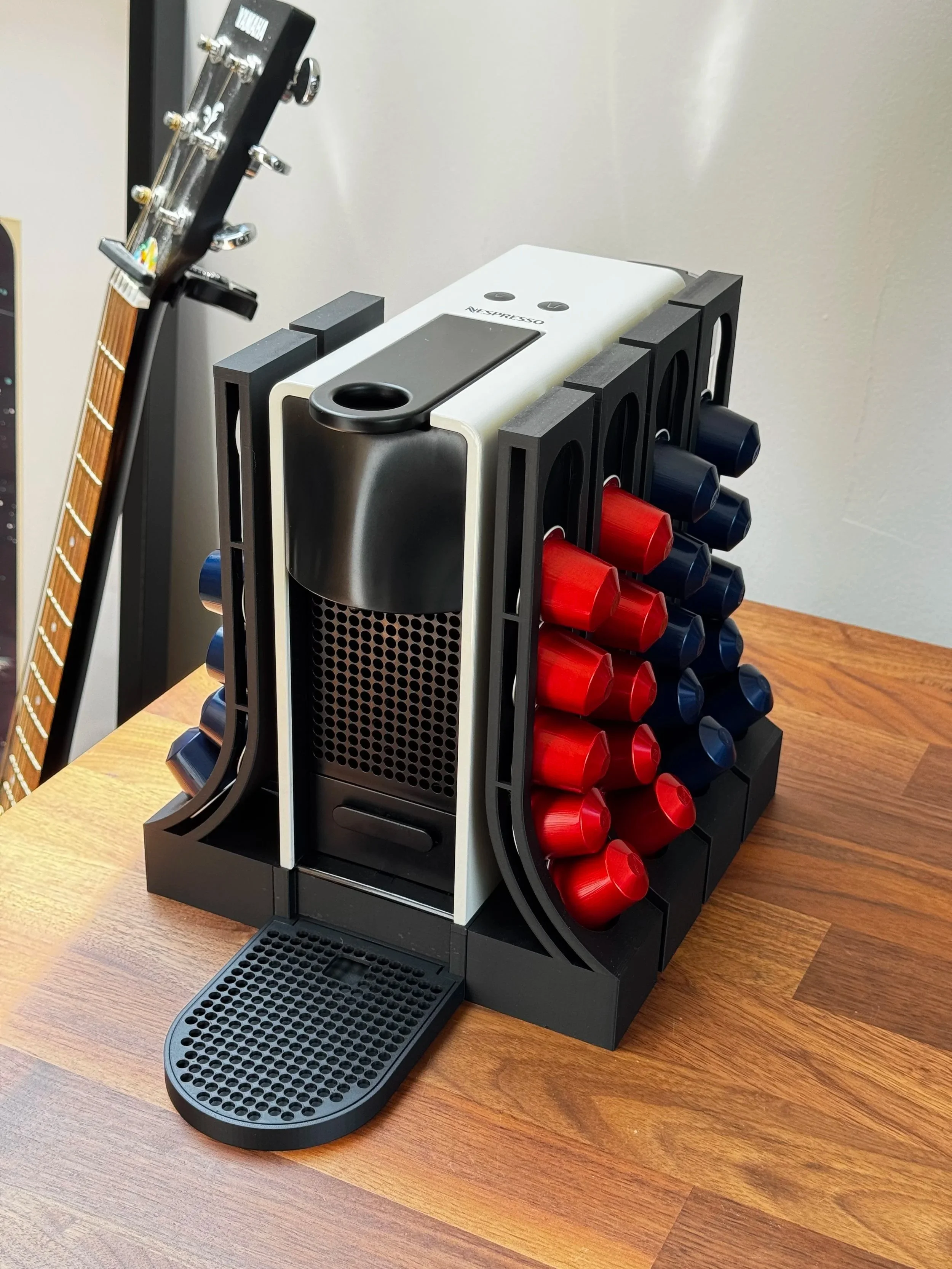
INTEGRATED CONSTRUCTION
The moving roller is enclosed during the 3D printing process.
Printing pauses at a planned layer. The prepared roller assembly is placed inside the housing. Printing resumes, enclosing the mechanism within the finished part.
PRINT. PAUSE. CAPTURE.
A / PRINT
BUILD THE HOUSING.
Print the geometry up to the insertion point, leaving the internal mechanism accessible.
B / PAUSE
PLACE THE ROLLER.
Insert the prepared roller and textured sleeve into their captive channel.
C / RESUME
ENCLOSE IT.
Complete the print, retaining the moving roller within the housing.
Process overview. Not manufacturing or assembly instructions.
DEVELOPMENT DOCUMENTATION
THE WORK IS STILL MOVING.
A separately printed, textured TPU sleeve wraps the roller, providing friction against the blade. The mechanism depends on the relationship between the roller, its angled channel and the contact material.
The material and shape remains subjects of testing - particularly across different blade finishes and weights.
OVERALL VIEW
MECHANISM DETAIL
OBJECT DETAILS
THE PARTICULARS.
Designed, prototyped and refined in-house at Thirty One Seven Studio. Final dimensions, finish options, and release details will be confirmed before orders open.
EXPERIMENTAL WALL-MOUNTED KNIFE STORAGE
APPLICATION
TEXTURE 3D-PRINTED TPU SLEEVE
CONTACT MATERIAL
ROLLER INSERTED MID-PRINT
ASSEMBLY
SHAPR3D / FDM 3D PRINTING
PROCESS
GRAVITY-ACTUATED CAPTIVE ROLLER
RETENTION
FOUR KNIFE SLOTS
CONFIGURATION
APPROXIMATELY 15-20 MECHANISM EXPERIMENTS
DEVELOPMENT
EXPERIMENTAL / NOT FOR SALE
AVAILABILITY
EXPERIMENTAL DESIGN
This design has not been validated for general kitchen use. Blade shielding, secure retention, resistance to accidental release, and wall-mounted reliability require further testing. The illustrations on this page explain a development concept; they do not demonstrate safe performance or provide installation instructions.
TWENTY EXPERIMENTS. ONE MOVEMENT
Different angles. Failed grips. Revised rollers. One rather involved solution to a small everyday irritation.